

Introduction
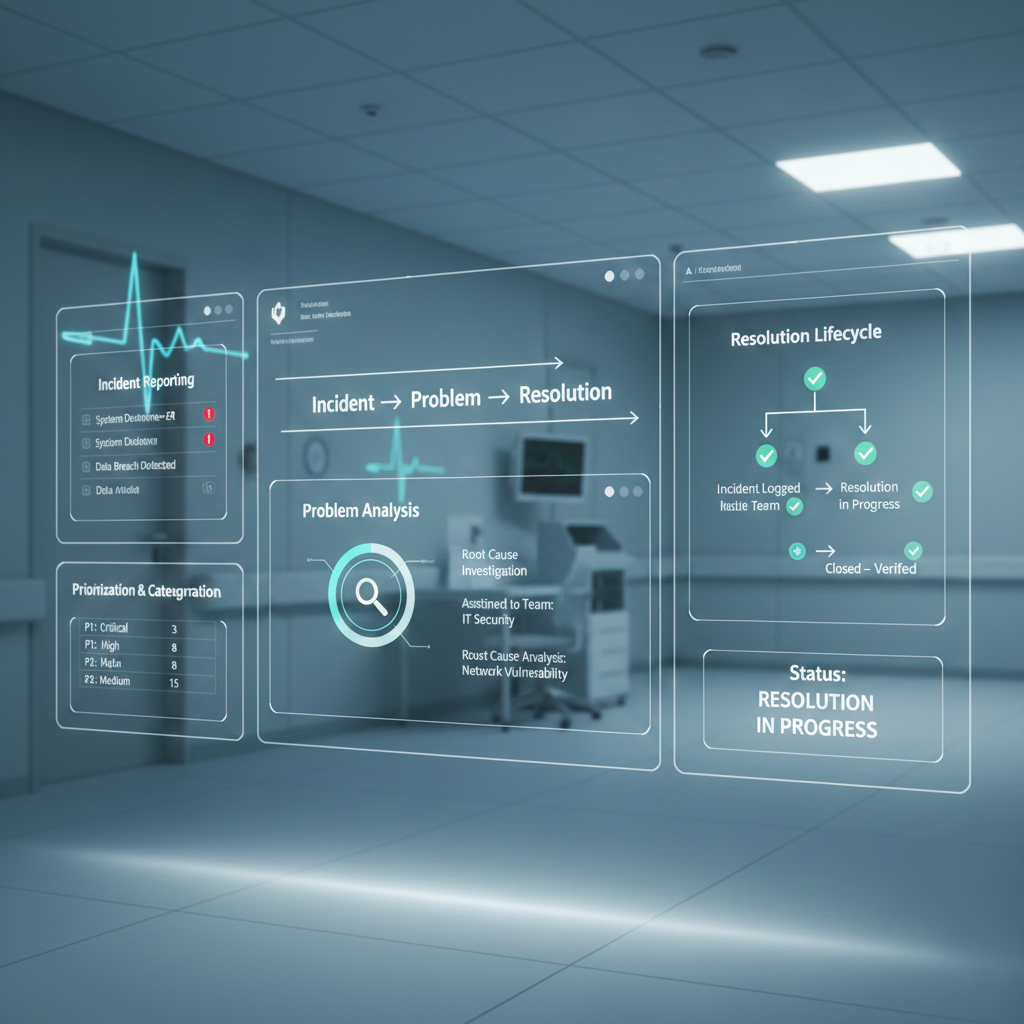
HMC Haaglanden operates in a 24/7 critical-care environment where system disruptions directly affect patient safety and clinical workflows. I was brought in to design and implement a formal ITIL v3 Problem Management capability to reduce recurring disruptions, eliminate duplicated incident noise and strengthen coordination between IT, medical staff and management.
The Core Problem
Before my involvement, the hospital faced several critical issues:
- Staff called the servicedesk for every problem, flooding the phone lines
- This meant the line was often blocked during true P1 emergencies, risking delayed patient care
- High volume of duplicate & poorly categorised tickets
- No formal Problem Management process, RCA structure or ownership
- Low adoption of the self-service portal, despite it being essential for workload reduction
This created unnecessary operational risk in an environment where minutes matter.


Discovery & Research
Full Incident & Problem Flow Analysis
- Mapped the entire as-is workflow, handovers and bottlenecks across servicedesk & IT
- Analysed historical ticket data to uncover recurring patterns and root causes
- Identified missing classifications, inconsistent prioritisation and undocumented workarounds
Hospital-Wide User Survey — Why No One Used Self-Service
To understand why everyone kept calling instead of logging via the portal, I surveyed staff across nursing, lab, admin and support units.
Key findings:
- Many didn’t know the portal existed
- The portal felt too complex vs. “just calling”
- No status updates → no trust
- Ticket categories didn’t match real-world hospital needs
These insights shaped the redesign.
What I Delivered
ITIL-Aligned Process Design
- Designed the full Problem Management process (aligned with ITIL v3)
- Delivered all supporting documentation:
- Process handbook
- Workflow diagrams
- RACI model
- Priority + escalation matrix
- Standardised RCA approach for recurring issues
Self-Service Portal (TopDesk) Setup & Adoption Boost
- Built and configured a new self-service portal in TopDesk
- Simplified the intake flows and categories based on real hospital use cases
- Added automated confirmations & live status updates to build trust
- Shifted large parts of intake volume off the phone queue → freeing phone lines for P1 incidents
TopDesk Configuration for Problem Management
- Created the Problem registration, linking incidents → problems → changes
- Enabled structured documentation, classification and prioritisation
- Built templates to ensure consistency
Cross-Team Alignment
- Aligned IT, servicedesk and management on roles, ownership and reporting
- Defined clear escalation procedures for after-hours emergencies
Business Results
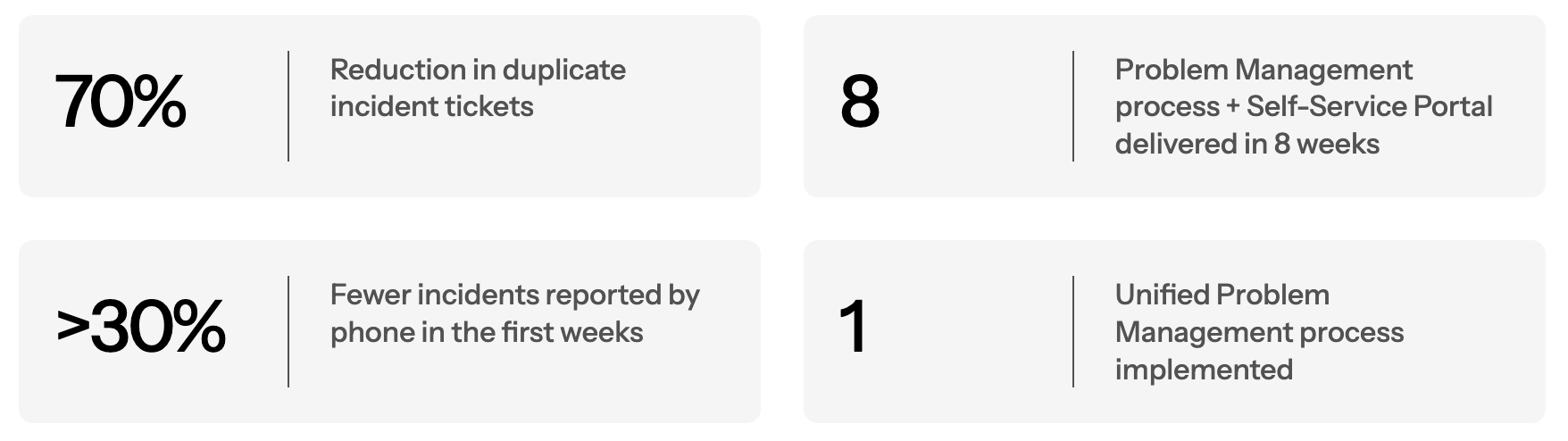
- 70% reduction in duplicate incident tickets
- Phone line availability for P1 incidents improved significantly due to large drop in unnecessary calls
- Fully operational Problem Management process + Self-Service Portal delivered in 8 weeks
- Faster and more accurate root-cause detection, improving reliability of clinical IT systems
- Higher self-service adoption thanks to simplified UX and clearer communication
Outcomes & Impact
Closing Thoughts
Within a high-stakes medical environment, even small inefficiencies can create real risk. By combining structured ITIL process design with user-centred improvements, I helped HMC Haaglanden regain stability, free its critical phone lines, and shift from reactive firefighting to controlled, data-driven problem management. This foundation strengthened both IT reliability and operational safety across the hospital.